
High-Pressure Fog & Misting Systems for Urban Heat Island Mitigation: 70-Bar Thermodynamics, Micro-Droplet Flash Evaporation & Plaza Cooling
Discover how 70-bar high-pressure misting systems and micro-droplet flash evaporation reduce urban plaza temperatures by 4–8°C without wetting pedestrians.
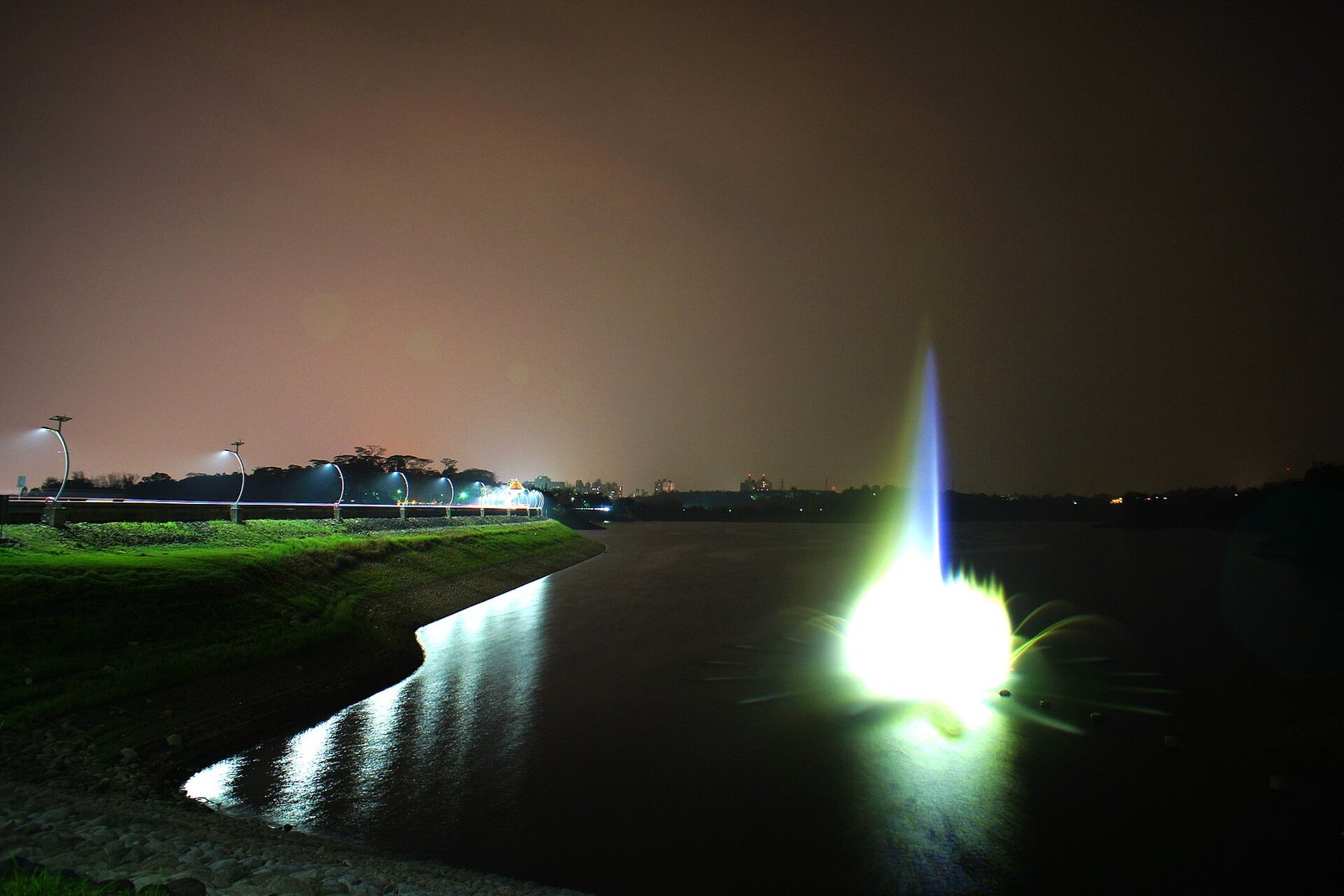
Thermodynamics of Flash Evaporation: Latent Heat Extraction
Urban Heat Islands (UHI) create microclimatic zones where asphalt, concrete, and masonry facades absorb solar radiation, elevating city core temperatures 5°C to 9°C above surrounding rural landscapes. Traditional water fountains cool purely by advection and limited surface evaporation. In contrast, Fludio's 70-bar high-pressure fog systems exploit the latent heat of vaporization: each kilogram of atomized water that evaporates absorbs 2,260 kilojoules (540 kcal) of thermal energy directly from the ambient air envelope. By generating droplets smaller than 10 microns, water evaporates in less than 0.8 seconds before reaching pedestrian walking surfaces, producing a localized adiabatic dry cooling zone without wet puddling.
Nozzle Metallurgy & Anti-Drip Check Valve Engineering
Low-pressure mist nozzles (under 20 bar) create large droplets (40–100 microns) that wet clothing, slip on marble flooring, and clog rapidly from mineral deposition. Fludio engineers precision AISI 316L stainless steel nozzle bodies incorporating artificial ruby or ceramic orifice inserts with micro-apertures of 0.15 mm to 0.30 mm. Crucially, each nozzle integrates an internal viton spring-loaded anti-drip check valve that snaps shut when line pressure drops below 35 bar upon pump de-energization, preventing residual line drainage and unsightly puddling on architectural walkways.
Filtration Protocols: Sub-Micron Multi-Stage Purification
Because micro-orifice nozzles possess apertures thinner than a human hair, hydraulic feed water must undergo rigorous multi-stage filtration to prevent mineral scaling and particulate clogging. Fludio mist pumping skids integrate a 5-micron sediment pre-filter, a 1-micron high-capacity polypropylene melt-blown cartridge, and a secondary magnetic scale inhibitor or reverse osmosis (RO) polisher. Furthermore, to eliminate microbiological risks such as Legionella in public pedestrian zones, all mist supply lines feature inline UV-C quartz sterilizers (40 mJ/cm² dose) ensuring 99.99% pathogen-free aerosolization.
Biophilic Landscape Integration & Smart Humidity Zoning
High-pressure fog systems serve a dual function in contemporary biophilic architecture: climate mitigation and ethereal visual scenography. Concealed within landscape planters, tree canopies, architectural water steps, or dry-deck plaza perimeters, fog arrays create rolling clouds of atmospheric mist illuminated by warm 2700K or dynamic RGBW IP68 LED lights. Fludio controllers utilize solid-state ambient temperature and relative humidity (RH) hygrometers; the system modulates mist pulse durations (e.g., 20s ON / 30s OFF) to prevent air saturation when ambient RH exceeds 75%.
Comparison: Low-Pressure Garden Misting vs. High-Pressure 70-Bar Architectural Fog
| Specification | Low-Pressure System (3–6 Bar) | Commercial Medium-Pressure (15–25 Bar) | Fludio High-Pressure 70-Bar Fog | Impact on Public Plazas |
|---|---|---|---|---|
| Droplet Micron Size | 50 – 120 microns (heavy water drops) | 25 – 45 microns (coarse aerosol) | 5 – 12 microns (dry aerosol) | Instant flash evaporation vs. slippery ground |
| Cooling Mechanism | Sensible surface wetting | Partial air evaporation | True adiabatic latent heat extraction | Drops ambient temp by up to 8°C without wetting |
| Nozzle Construction | Molded plastic or soft brass | Nickel-plated brass | AISI 316L Stainless with Ruby Orifice | Immune to chloride corrosion and lime-scale wear |
| Anti-Drip Mechanism | None (dribbles constantly at stop) | Basic ball-check valve | 35-bar calibrated Viton spring seal | Zero floor puddles or pedestrian staining |
| Sanitization | Untreated municipal line | Basic paper cartridge filter | 5μ + 1μ filtration + 40mJ/cm² UV-C | 100% compliant with public health pathogen codes |
Technical FAQs
Does the high-pressure mist get pedestrians' clothes or glasses wet?
No. At 70 to 100 bar, the droplets measure under 10 microns and flash-evaporate into water vapor within a fraction of a second before settling on pedestrians or pavement.
How much water does a typical commercial plaza misting system consume?
Surprisingly little. Each 0.20 mm ruby-orifice nozzle consumes only 0.075 to 0.090 liters per minute (LPM). A 50-nozzle perimeter cooling array consumes less than 4.5 liters per minute—under 10% of a standard garden hose.
What maintenance is required for high-pressure mist systems in hard-water regions?
In areas with TDS above 500 ppm, Fludio recommends soft-water or RO feed lines. Micron filter cartridges should be replaced every 3 months, and pump crankcase oil changed annually.
Can mist nozzles be integrated directly into dry-deck fountain grates?
Yes. Fludio manufactures hybrid dry-deck modules featuring a central dynamic jumping jet ringed by 4 peripheral high-pressure mist nozzles for combined dramatic effect and thermal cooling.
How does the system prevent stagnant water bacterial growth during downtime?
Fludio automation skids feature an automated high-velocity line purge routine that dumps stagnant water to drain and recharges the stainless steel lines before each operating cycle.
Have a Fountain Project Requiring Expert Engineering?
Consult with Fludio's hydraulic engineers for complete DMX 512 choreography, pump sizing, and certified 304L stainless steel hardware.
Consult Our Engineering Team